Where the Story Waited
There are cities that impress you with landmarks and skyline views, and then there are cities that settle into your bones and refuse to leave. Edinburgh did the latter for me.
In June of 2023, I traveled to London for the Self Publishing Show Live. After the conference ended, my travel partner and I boarded a train north to York, where we spent several warm, sun-soaked days exploring medieval streets under an unexpectedly relentless summer heat. York felt golden and generous. But when we continued on to Edinburgh, the air shifted. Even in late June and early July, it was noticeably cooler—wind brushing through the closes, clouds moving quickly across a layered sky, stone darkened by centuries of weather.
Edinburgh did not feel golden. It felt ancient.
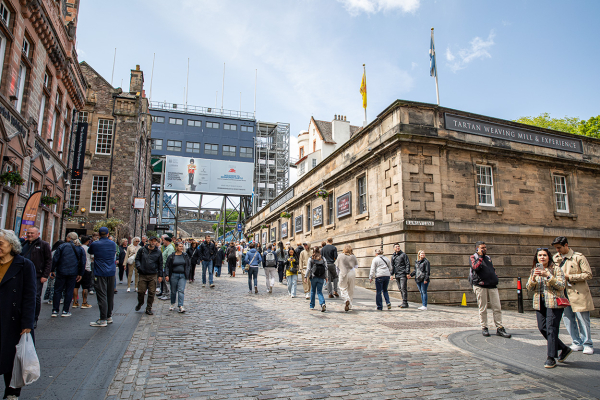
We walked the length of the Royal Mile more than once, ducking into narrow passages and letting the city unfold at its own pace. We toured The Real Mary King's Close, where the underground streets carry the quiet weight of lives lived long ago. We stepped aboard the Royal Yacht Britannia and moved through rooms that still seemed to echo with ceremony and discipline. We climbed hills, circled back through courtyards, and allowed ourselves to get slightly lost on purpose.
But two places remained just out of reach.
Tickets to Edinburgh Castle were sold out for every day we were there, and Palace of Holyroodhouse was closed because King Charles III was in residence during our stay. We saw the Castle rising above the city. We stood outside the gates of Holyrood and looked inward from a distance. What we experienced were glimpses—stone walls, guarded entrances, hints of stories hidden inside.
It felt incomplete, and I have learned to trust that feeling.
Returning for What Was Missing
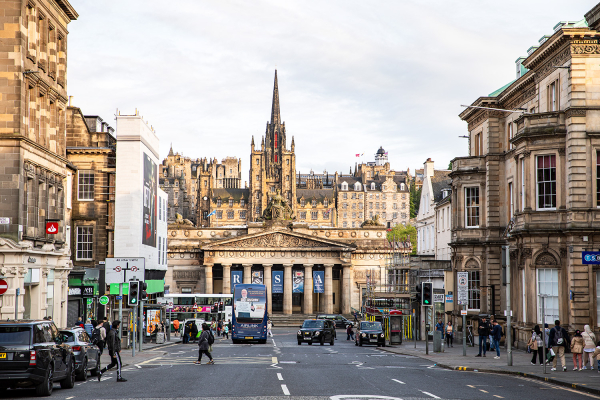
Last summer, we returned deliberately. We flew directly from Los Angeles to Edinburgh and devoted three full days to the city alone. There were no detours this time, no competing plans. We walked through the gates of the Castle and climbed its heights, looking down over a city that seems to exist in layers—medieval foundation, Georgian elegance, modern life all intertwined.
At Holyrood, I moved more slowly.
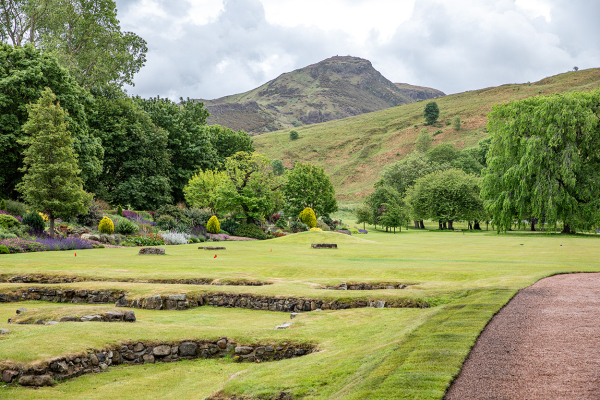
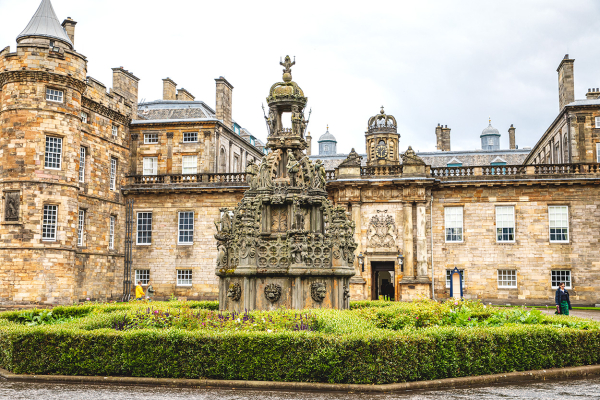
Inside the palace, history is not decorative; it is palpable. In the gardens, the wind moves freely across open space framed by stone and the ruins of Holyrood Abbey. Standing there, I understood something about power—not the loud, theatrical kind, but the enduring kind. The sort that survives betrayal, ambition, and time itself.
If you visit my picture gallery, you’ll see the Castle rising above the skyline and the quiet geometry of Holyrood’s grounds. Those images capture more than architecture. They hold atmosphere. They hold tension.
And that tension mattered.
The Moment the Story Shifted
Two years ago, I began writing Dark Running. I envisioned a trilogy and completed the first book. Yet when I reached the end, I did not publish it. The structure worked, the plot advanced, but something essential was missing. Experience has taught me not to force a story into the world before it is ready. Stories, like cities, open on their own timetable.
As I stood within Holyrood last summer, I felt that timetable change.
Alanis belongs in a world shaped by old power and layered loyalties. She is not a heroine fashioned by prophecy. She is forged by survival. She carries history in her blood and navigates dangerous ground with deliberate strength. There is nothing ornamental about her resilience.
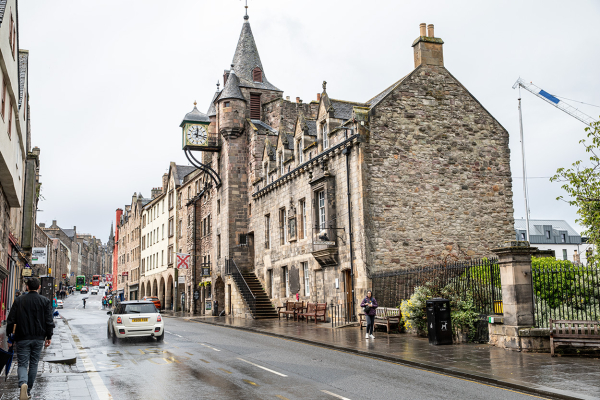
Walking the Royal Mile again, I sensed that the environment—the stone, the wind, the sense of watchful memory—aligned with her voice. The city did not hand me a plot. It clarified a tone. It sharpened a direction. When we returned home, I knew it was time to finish her story.
I have written elsewhere about how I approach storytelling, and I won’t repeat that process in detail here. I do not outline extensively. I listen. When a character speaks clearly, I follow. When they fall silent, I wait. That method has guided every book I have completed, and it guided this one as well.
Alanis spoke again.
And this time, I listened carefully enough to hear her all the way to the end.

From Planned Trilogy to Standalone
When I first imagined Dark Running, I saw three volumes. Over time, however, the narrative found its natural boundary. By the final pages, Alanis had said what she needed to say. The arc felt complete, not truncated. Satisfying rather than suspended.
I never rule out the possibility of returning to a character. Voices have a way of resurfacing when least expected. But at this moment, her story stands on its own.
If you look closely at the Castle photographs in the gallery, you’ll see why. The scale. The vertical rise. The sense of vigilance. In the Holyrood images, you’ll notice contrast—open lawns against stone walls, beauty layered over endurance. Those dualities echo throughout Dark Running: strength and vulnerability, loyalty and danger, history and forward motion.
Edinburgh did not create Alanis.
But it refined her.
The Value of Going Back
There is a particular kind of satisfaction in returning to a place that once felt unfinished. When we first stood outside the Castle gates in 2023, we saw only the exterior. Last summer, walking its interior walls and courtyards, the experience felt earned.
The same can be said for the story.
Sometimes what feels like delay is simply preparation. Sometimes what appears incomplete is only waiting for the right moment to unfold fully.
Edinburgh waited. The story waited.
Now it is told.
If you have not yet stepped into Alanis’s world, I hope you will. And if you have, I invite you to revisit the Castle and Holyrood images in the gallery and see whether you recognize the atmosphere that shaped her journey.
Some cities inspire admiration.
Others quietly insist on becoming part of the story.
Edinburgh did both.